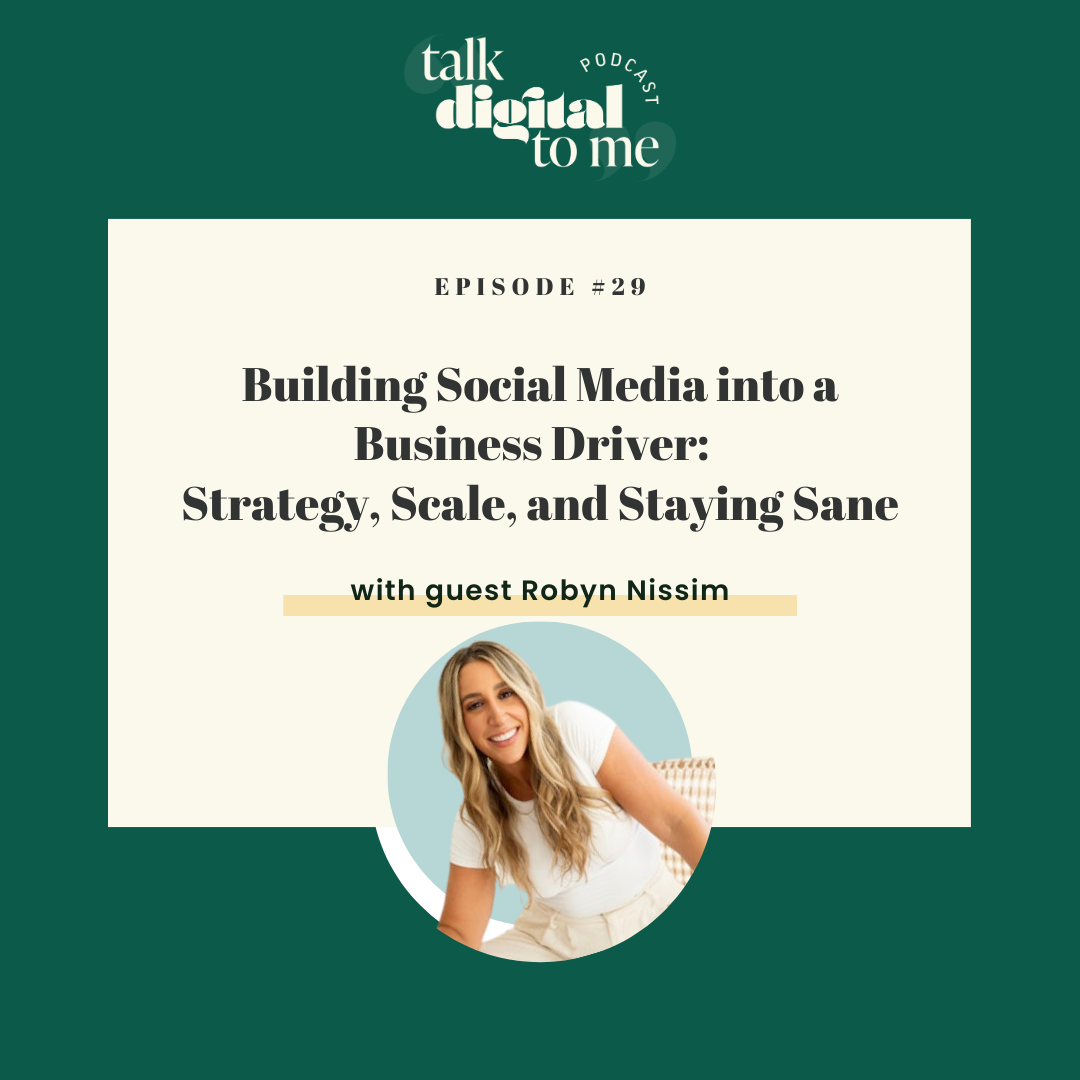
Listen to the podcast:
Below are key insights and actionable takeaways from our conversation.
Key Takeaways
From “Just Posting” to Running Social Like a Business
Early in her career, Robyn was managing social for powerhouse brands like Michelin and Nissan, creating viral campaigns long before “content creator” was a job title. But it wasn’t until her time at Anastasia Beverly Hills that she shifted from posting based on feelings to running social as a data-driven business channel.
“It’s not just vibes, it’s vibes and measurable impact.”
She began tracking performance beyond likes, tied campaigns to e-commerce goals, and got finance leaders involved in social strategy. That strategic shift earned her a seat in forecasting meetings, budget control, and direct collaboration with the CEO in later roles.
Advice for Social Media Managers Stuck in the Grind
Robyn’s advice for moving from “content calendar manager” to strategic leader:
-
Master your craft — Put in years of hands-on work before expecting to lead strategy.
-
Know your audience better than anyone — Use insights beyond vanity metrics.
-
Think full-funnel — Tie social performance to lead generation, signups, and conversions.
-
Integrate cross-functionally — Work with every department to align goals.
Speaking the C-Suite’s Language
To get executives to take social seriously, Robyn recommends telling a three-part story:
-
Vanity metrics — How the audience resonates (likes, saves, shares).
-
Engagement to action — Signups, site visits, pre-orders.
-
Business impact — Purchases, revenue, repeat engagement.
At Allo Yoga, this approach helped her scale organic social to drive $17 million per month in revenue.
The Biggest Problem Holding Brands Back
In Robyn’s view, 90% of brands can’t keep up with social’s pace because decision-makers haven’t used it themselves. They under-resource teams, assign social to the youngest hire, and lack a true strategy.
Her elevator pitch to hesitant executives:
“Fully staff and support social like every other marketing arm, and it will become a business driver contributing 2%+ of revenue organically.”
Case Study: Scaling Allo Yoga
When tasked with making Allo Yoga “the it brand,” Robyn created separate channels for different audiences — Allo Men, Allo Wellness — each with unique content, influencer, and paid strategies.
This hyper-targeted approach:
-
Expanded reach into new demographics
-
Strengthened brand affinity through events and community-building
-
Aligned PR, social, and influencer teams under a single strategic flywheel
Scaling Without Burning Out
Robyn’s secret? A locked strategy and well-oiled processes.
Her eight-week group training program, Running Social for Brands, teaches social pros how to:
-
Build and execute strategy
-
Work cross-functionally
-
Secure resources and support
-
Scale without constant chaos
Trends Worth Watching
Robyn focuses on content format trends over fleeting audio trends. Formats like interactive “This or That” games or creative multi-post Reels have staying power and can be adapted across platforms, making them more valuable for brand building.
Quotes from Robyn:
On Community:
“You can post a high-performing video with zero depth, or a low-fi video that creates real conversation. I’ll choose conversation every time.”
On Strategy:
“You can’t scale without a process. Social media has to be strategic.”
On Brand Voice:
“Become the brand: how it thinks, speaks, and shows up. Your personal style doesn’t always translate.”
On Leadership:
“Work backwards from what your CMO or CEO is trying to do, and show how social helps get there.”
Looking Ahead
Robyn’s top 3 takeaways for creators, marketers, and brand builders:
-
Consistency beats cleverness — Build systems that work even on your worst day.
-
Your brand voice matters more than trends — Stay true to your tone, values, and personality.
-
Stop creating for the algorithm — Start creating for people.
Connect with Robyn on LinkedIn: https://www.linkedin.com/in/rnissim/
Want more conversations on digital strategy + personal growth?
Subscribe to Talk Digital To Me!