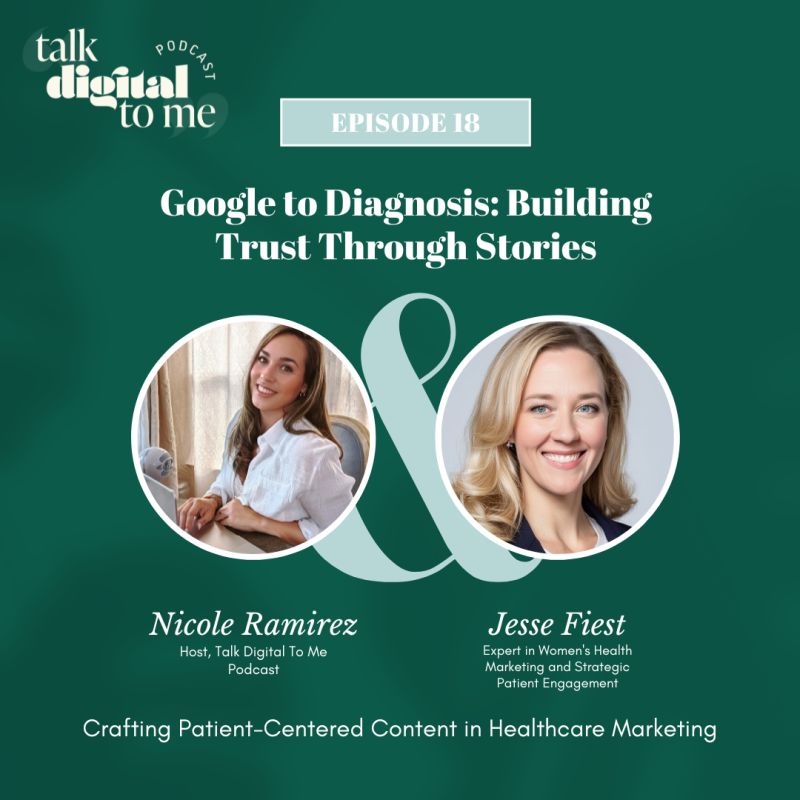
Listen to the podcast:
Below are key insights and actionable takeaways from our conversation.
Key Takeaways
Key Takeaways
The Power of SEO and Content in Patient Acquisition
-
Patients begin their healthcare journey by searching symptoms online.
-
Google processes about 70,000 healthcare queries per minute, highlighting the demand for high-quality medical content.
-
Brands need to prioritize symptom-related content to establish trust before patients consider specific providers or treatments.
A Practical Content Funnel for Digital Healthcare
Jesse outlined a structured approach to content creation that aligns with the patient journey:
-
Symptoms – Patients search for answers to concerns like irregular periods or persistent fatigue.
-
Diagnostics – Once aware of potential issues, they seek clarity on tests and evaluations.
-
Conditions – Patients research medical diagnoses, treatment options, and potential outcomes.
-
Treatments – At this stage, patients evaluate providers and treatment plans, making conversion-focused content essential.
Pro Tip: Prioritizing symptom-based content enhances visibility and brings in net-new patients who haven’t yet chosen a provider.
Balancing Educational Content and Patient Trust
-
Healthcare marketers must focus on storytelling to humanize medical conditions.
-
Authentic patient stories resonate deeply and create emotional connections.
-
Case studies should highlight real experiences, from symptom recognition to treatment outcomes.
-
Trust-driven content fosters engagement and credibility, making providers the go-to resource for patient care.
SEO & Data-Driven Decision Making
Measuring content success in healthcare requires a strategic approach:
-
Organic Search Traffic: How well content ranks and attracts potential patients.
-
Click-Through Rates (CTR): Measures engagement with specific topics.
-
Conversion Metrics: Tracks new patient visits (NPVs) generated through content.
-
Lifetime Value of Patients (LTV): Aligns content strategies with high-value patient acquisition.
How Healthcare Providers Can Maximize Content Impact
For providers with limited marketing resources, Jesse suggests:
-
Optimizing Google Business Profiles – Ensures visibility in local searches.
-
Encouraging Patient Reviews – Authentic testimonials build trust.
-
Focusing on High-Impact Keywords – Prioritizing content with high search volume and commercial intent.
-
Creating FAQ Pages – Addresses common patient concerns proactively.
Trends Shaping Healthcare Content Strategy
-
AI & Interactive Content – Expect more symptom checkers, decision tools, and AI-driven chatbots.
-
Short-Form Video & Social Media Search – TikTok and AI-powered search are redefining how patients gather health information.
-
Clinician-Led Content – AI-generated articles must be backed by medical professionals to maintain credibility.
Quotes from Jesse Fiest
-
On Content Strategy: “Content isn’t just about driving clicks; it’s about guiding people through one of the most personal journeys of their lives.”
-
On the Importance of SEO: “Prioritizing symptom-based content enhances visibility and brings in net-new patients who haven’t yet chosen a provider.”
-
On Building Trust in Healthcare Marketing: “Trust-driven content fosters engagement and credibility, making providers the go-to resource for patient care.”
-
On Healthcare Content Trends: “AI-generated content will continue to grow, but authentic clinician-led storytelling will remain crucial for credibility.”
-
On Maximizing Content Impact: “If you want to rank and resonate, focus on high-impact keywords, patient stories, and FAQ content.”
Looking Ahead
As healthcare marketing evolves, authenticity, trust, and data-driven strategies will be the pillars of success. Jesse’s insights remind us that healthcare content must do more than inform—it must connect, guide, and empower patients throughout their journey.