Listen to the podcast:
Below are key insights and actionable takeaways from our conversation.
Key Takeaways
Rethinking Brand Authority: Owning the Conversation
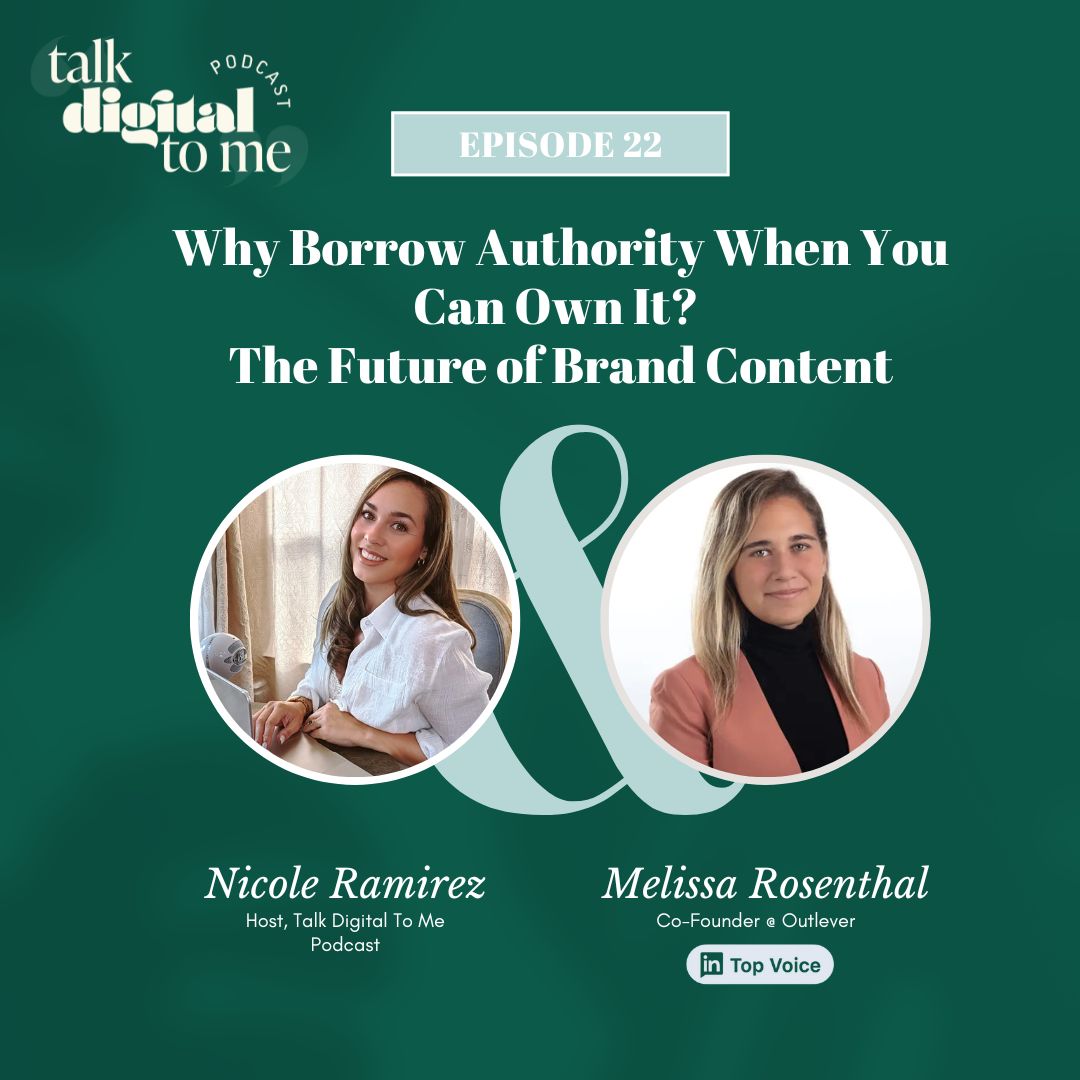
Melissa Rosenthal believes that brands shouldn’t just rent space in media—they should own it. OutLever, her latest venture, bridges the gap between traditional media authority and B2B brand leadership, enabling companies to establish themselves as industry news sources. Rather than relying on fleeting ad partnerships, brands can invest in content that builds long-term credibility and trust.
The Common Thread in Building Successful Brands
From BuzzFeed to ClickUp, Melissa has helped brands grow by challenging industry norms. The key to success? Thinking differently, identifying gaps in the market, and being willing to take bold risks. Brands that innovate rather than follow trends are the ones that truly stand out.
How Brands Can Own Their Industry Conversations
Melissa emphasizes the importance of brands inserting themselves into industry conversations rather than solely pushing product messaging. Companies should ask:
What topics matter most to our audience?
How can we provide value without being self-promotional?
Are we empowering our community to speak on relevant issues?
Duolingo is a prime example of a brand that “newsjacks” viral moments, ensuring their voice is always part of trending discussions. This approach helps them remain top-of-mind and relevant.
Breaking Through in a Crowded Market
For newer brands looking to establish authority, Melissa recommends:
1. Penetrating industry conversations by focusing on niche topics that matter to their ideal customers.
2. Providing a platform for others instead of always making it about their own product or services.
3. Building relationships, not just content, by engaging authentically with their audience.
Avoiding Common Thought Leadership Mistakes
Too many brands make the mistake of relying on a single strategy—whether it’s founder-led thought leadership or first-party research. Instead, Melissa advises taking a more holistic approach that includes:
1. Multi-channel engagement (LinkedIn, editorial content, industry events, etc.)
2. Encouraging employees to build their own personal brands and share insights
3. Diversifying content formats beyond just blog posts and white papers
The Future of Content Marketing
Melissa predicts that the traditional SEO playbook is on its way out. AI-driven search and algorithm changes will force brands to find new ways to distribute content. Moving forward, successful content marketing will be driven by:
1. Relationships and strategic partnerships
2. Timely, news-driven content that keeps brands relevant
3. Creative, outside-the-box engagement strategies
LinkedIn’s Role in Brand Growth
While LinkedIn is a powerful tool for brand building, Melissa warns against putting all your eggs in one basket. Algorithm changes can disrupt a strategy overnight, so brands should diversify their efforts across multiple platforms to ensure long-term success.
Balancing AI and Human Creativity
AI is a powerful tool for efficiency, but it shouldn’t replace human creativity. Melissa sees the best use of AI as tech-enabled creativity, where AI streamlines tasks and enhances strategy, while human insight ensures authenticity and engagement. Brands that overly rely on AI-generated content risk losing their voice and credibility.
Final Advice for Startups
Melissa’s advice for startups looking to become industry leaders is simple:
1. Identify key conversations happening in your space and find ways to participate authentically.
2. Build relationships rather than relying on mass outreach.
3. Provide real value to your audience before expecting anything in return.
The Future of Marketing: A Return to Human Connection
With AI flooding inboxes with generic outreach, Melissa believes the future of marketing lies in human relationships. Personal connections, real conversations, and thoughtful engagement will be the differentiators in an increasingly automated world.
Quotes from Melissa
On Brand Authority:
“Brands shouldn’t just rent space in media. They should own the conversation in their industry.”
On Thought Leadership:
“It’s not just about putting your founder on LinkedIn. True thought leadership is a company-wide effort that empowers employees and customers to share insights.”
On Content Marketing’s Future:
“The SEO game we’ve played for the past decade is over. Relationships, news-driven content, and creativity will drive the next era of content marketing.”
On AI in Content Creation:
“The perfect balance is tech-enabled creativity—using AI to enhance productivity but keeping the human element at the core.”
Looking Ahead
Melissa’s top advice for marketers is to lean into authenticity, creativity, and relationship-building. While AI and automation will continue to evolve, brands that focus on real human connection will remain competitive in the long run.
A huge thank you to Melissa Rosenthal for sharing her insights! Connect with her on LinkedIn to follow her latest work with OutLever.
For more expert conversations, subscribe to Talk Digital to Me and stay tuned for our next episode!